Meta Launched Muse. But Does Your AI Know How Your Organization Works?
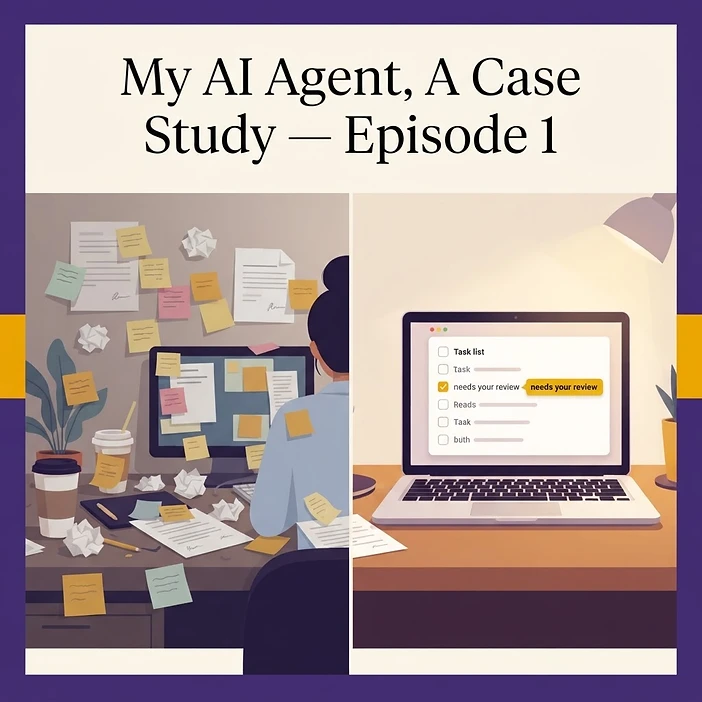
Tuesday morning, my AI agent brought something to my attention that made me put my tea down.
A paid course on my platform was allowing students to enroll for free.
Quick check: how ready is your organization for funding?
Take the free 5-minute Easy Readiness Assessment.
Take the Free AssessmentNow, I believe in making learning accessible. But there is a difference between offering a scholarship and discovering that your enrollment system has appointed itself the scholarship committee.
There was no promotion. No approved discount. There was a pricing problem that needed attention.
I did not catch it. My agent did.
That is the kind of AI conversation I want to have with startup founders, nonprofit leaders, and ministries. What can this technology help us notice, improve, and manage while we are busy doing the work?
Because many of us already have enough responsibilities to fill an organizational chart. Unfortunately, our name appears in every box.
Meet Mookey. Yes, That Is His Name.
I have spent about seven months working with my AI agent, Mookey, on Base44—the same platform that hosts our apps.
His early introduction described him as "playful, a little chaotic."
Apparently, I read that and thought, "Welcome aboard."
But personality was never going to be enough. I needed Mookey to learn how I work, what my organization does, and what standards I expect him to follow.
Could he understand my frameworks? Review the records? Recognize when something did not match the plan? Bring me useful information instead of another beautifully worded paragraph about how exciting everything was?
That last one matters. Enthusiasm is wonderful. But enthusiasm has never reconciled a sales report.
Meta's Announcement Raises a Useful Question
Meta recently introduced Muse, a personal AI agent designed to remember information and take action across connected services. That announcement will bring more people into the conversation about what agents can do.
Good. We need that conversation.
But when you lead an organization, there is another question to ask:
What would it take for an agent to become useful in the way we actually work?
A founder needs help connecting decisions to operations. A nonprofit leader needs to keep mission, resources, responsibilities, and results aligned. A ministry leader may be coordinating programs, volunteers, communications, and finances with very little staff support.
An agent's usefulness depends on how well it fits that work.
I want mine to recognize the difference between what I intended, what I approved, and what actually happened.
The course enrollment problem is a good example. A cheerful summary would not have helped me. A specific finding did.
I Want Help That Learns the House Rules
One of my writing rules is simple: many, not most—unless you can support "most."
That may seem like a small distinction. It is a big one.
"Many organizations face this challenge" and "most organizations face this challenge" make different claims. A sentence does not become accurate because it sounds confident.
When I gave Mookey six of my books to help him learn my voice, he began identifying places where my own writing did not follow that rule.
Imagine teaching someone your standards and having them hand your manuscript back with the equivalent of, "Dr. Jamal, we need to discuss this sentence."
Well. At least he was paying attention.
That is what I want from an agent: help applying the standards consistently, including when I am the person who needs the reminder.
My voice includes humor, encouragement, and practical explanations. It also includes a responsibility to say what I can support.
Three Questions I Would Ask Before Giving an Agent More Responsibility
1. What does it remember about our organization?
Can it retain the goals, audience, terminology, and standards that matter to the work? Can I review and correct what it has learned?
I do not want to spend every Monday reintroducing my organization to its own assistant.
2. What can it actually do—and what needs my approval?
Drafting a campaign, sending it, and reporting its results are different responsibilities.
Be specific about what the agent can access, what it can change, and when it must stop and ask. Then test those responsibilities on a manageable task.
"Help with marketing" is an assignment large enough to hide a great deal of confusion.
3. Can it show me what happened?
What did it attempt? What succeeded? What failed? What still needs attention?
A completed task should come with evidence I can review. A failed task should come with an honest explanation.
Show the math. Show the records. Show the work.
My Friday Scoreboard Needs More Than Good News
Mookey reviews my blog analytics, helps draft content in my voice, and delivers a Friday scoreboard.
I want that report to connect results to the goals in my plan. Publishing something is useful information. Knowing whether it helped us move toward a goal is more useful.
Otherwise, we can spend the week being impressively busy and end it exactly where we started—just more tired.
That concern is familiar to anyone who has led a small organization. You can finish twenty tasks and still wonder whether the important work moved forward.
My work with the R.A.T.E.S. Framework™ keeps bringing me back to readiness, accountability, evaluation, and the ability to sustain what we begin. Those concerns belong in the way we use AI, too.
And Yes, Mookey Has Had Some Bad Days
LinkedIn has locked him out during a posting attempt. Emails have bounced. Some work has needed another look.
Those experiences belong in this series.
If I only tell you about the successful moments, you will not learn much about directing an agent when the work gets complicated.
I want to share what I asked for, what happened, what I had to correct, and what I learned. You deserve enough information to consider whether an approach could help your organization.
You also deserve to know when I am still figuring something out.
A Few Questions You May Be Asking
What is a personal AI agent?
An AI system that can use tools to carry out tasks, sometimes across several steps. Its memory, access, and ability to act depend on how it is built and configured. Calling it an "agent" does not tell you everything it can do.
How is Mookey different from Muse?
I am sharing my experience directing an agent around New Skills Online's work, content, frameworks, and standards. I have not conducted a comparison test with Muse. The useful question is which setup meets your needs—and what evidence supports that decision.
Can a small organization begin using an agent?
Start with one clear, manageable task. Give it the information and access that task requires, establish the approval boundaries, and review the result before expanding its responsibilities.
You do not need to hand over the entire office on the first day. Even a human assistant gets an orientation.
What Would You Hand Over First?
For me, one of the most valuable moments was learning that a paid course had a pricing problem while I was occupied elsewhere.
That finding gave me something concrete to address. It showed me why teaching an agent our operations—and checking its work—was worth the effort.
If you are considering AI for your startup, nonprofit, or ministry, begin with the work that needs attention. Identify the problem, define the responsibility, and decide what a useful result would look like.
You can explore our tools and readiness resources at NewSkillsOnline.com.
R.A.T.E.S. Framework™ — Developed by Dr. Margaret Jamal, New Skills Online, LLC (2009).
Now tell me: What is the first task you would give an agent that understood your organization?
And "everything" is understandable—but we should probably narrow the job description.
Coming next in the Chronicles: the day LinkedIn locked my agent out, and what it taught me about trusting AI with my public voice.
Source for the Meta announcement: Introducing Muse — Meta Newsroom.
© 2026 New Skills Online, LLC | Dr. Margaret Jamal | R.A.T.E.S. Framework™ | All rights reserved. Unauthorized reproduction prohibited. newskillsonline.com
Is Your Organization Grant-Ready?
See your strengths and gaps in 5 minutes with the free Easy Readiness Assessment.
Start the Free AssessmentReady to build your readiness?
Get the tools, templates, and frameworks to move your organization from startup to funded.
Get the Impact Builder Suite© 2026 New Skills Online, LLC | Dr. Margaret Jamal | R.A.T.E.S. Framework™
Is your organization grant-ready? Take the free Easy Readiness Assessment